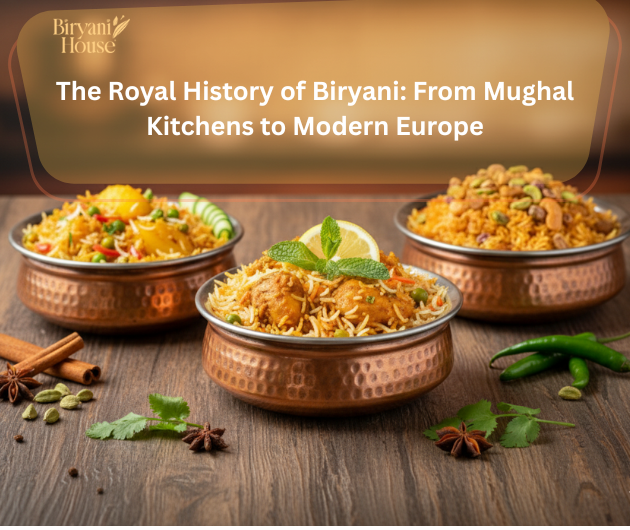
If there’s one dish that defines comfort, celebration, and culinary artistry all at once, it’s biryani. Fragrant, layered, and rich in history, biryani isn’t just food; it’s a story that has traveled across empires, cultures, and continents, from the royal kitchens of the Mughals to restaurants like Biryani House in Dordrecht, the heart of the Netherlands.
A Royal Beginning: The Birth of Biryani
A common question people search is:
Where is biryani from? The biryani country of origin is widely traced to the Indian subcontinent during the Mughal Empire, with strong Persian and Central Asian influence.
So when people ask:
biryani is from which country? biryani origin country? where is biryani originally from?
The most accepted answer is: Mughal India (historically influenced by Persian cuisine).
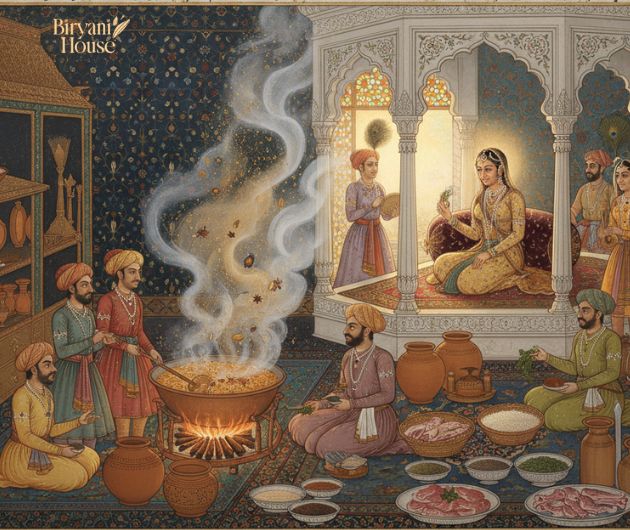
It’s believed that Empress Mumtaz Mahal (yes, the one for whom the Taj Mahal was built) once asked her royal chef to create a nutritious meal for her soldiers, and thus, biryani was born. Cooked with unique rice, meat, aromatic special spices, and ghee, it quickly became the crown jewel of Mughal feasts.
Who Made Biryani? (Biryani Story)
There is no single person who invented biryani.
The question “who made biryani?” is often answered through two popular historical theories:
1. The Mughal Army Theory
Biryani was created as a complete, nutritious meal for soldiers:
rice
meat
spices all cooked together for portability and energy.
2. The Royal Kitchen Theory
Others believe biryani was perfected in Mughal royal kitchens as a luxurious dish for emperors and queens.
Either way, biryani was shaped by Mughal culinary tradition, not a single inventor.
Regional Transformations: From Delhi to Dhaka and Beyond
As biryani spread across the Indian subcontinent, every region added its own personalized ingredients, influenced by local tastes, ingredients, and cultural heritage.
Although biryani becomes more personalized with local tastes, some varieties are the best in their category:
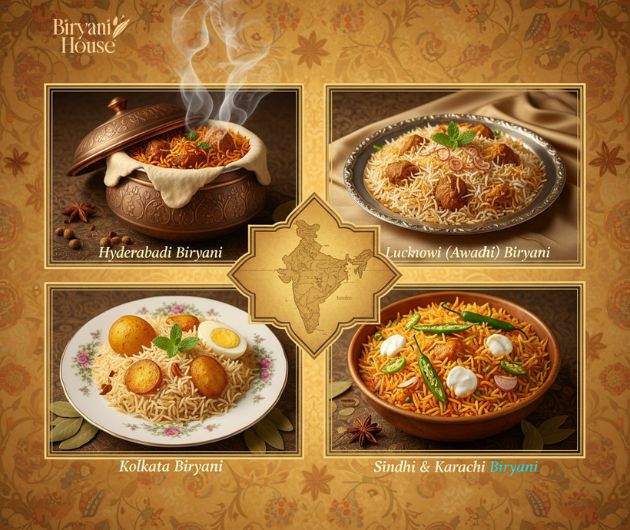
Hyderabadi Biryani – Known for its deep spice and rich aroma, cooked in the dum (slow-sealed) style.
Lucknowi (Awadhi) Biryani – Fragrant and mild, with meat and rice cooked separately before layering.
Kolkata Biryani – Light and delicate, often featuring boiled eggs and potatoes, a remnant of royal frugality.
Sindhi & Karachi Biryani – Bold, tangy, and rich with yogurt and green chilies.
Each version tells a different story, of migration, adaptation, and love for good food.
The Journey to Europe: A Global Love Story
With migration and trade, biryani didn’t stay confined to South Asia. Immigrants carried it to the Middle East, the UK, and mainland Europe, where it quickly found admirers.
In the Netherlands, the dish grew in popularity among both South Asian communities and local food enthusiasts. What once belonged to royal courts is now a beloved weekend comfort food in Dutch cities like Dordrecht, where people come together over shared plates of steaming biryani, just as Mughals once did centuries ago.
Biryani in Dordrecht: Preserving Authenticity, Serving with Passion
At Biryani House Dordrecht, we keep that royal tradition alive, carefully layering long-grain basmati rice, meat, saffron, caramelized onions, and spices in perfect harmony.
Every pot is slow-cooked the traditional way, maintaining the balance of aroma, texture, and flavor that defines true biryani. Whether it’s Hyderabadi Dum Biryani, Pakistani Biryani, or a vegetarian version, each bite carries a piece of history, made fresh for modern palates.
Biryani isn’t just a recipe. It’s a cultural connection, a bridge between heritage and modernity, East and West. Even in a city as scenic as Dordrecht, this centuries-old dish continues to unite people through the universal language of taste.
“From royal kitchens to cozy dinners in the Netherlands, biryani’s journey is a reminder that food, when made with love, travels farther than empires ever could.”
Taste the Legacy Yourself
Curious to experience the royal flavors of biryani in Dordrecht? Visit Biryani House Dordrecht at Voorstraat 394 or explore our All-You-Can-Eat Buffet from Thursday to Sunday (17:30–22:00). Whether you’re a local or a traveler, there’s always a seat at our table, and a story in every plate.