
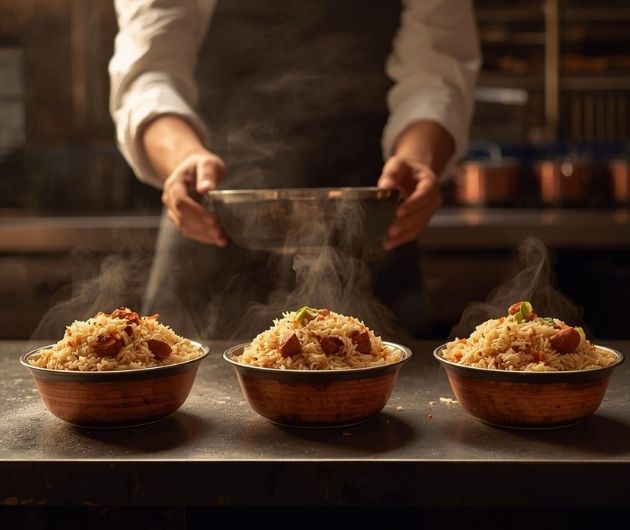
When a plate of biryani is placed on the table, most people notice the aroma first. Then the spices. Then the meat.
But in our Dordrecht kitchen, we look at something else before anything — the rice.
Because no matter how rich the gravy or how tender the meat, biryani can only be perfect when every grain of rice tells the same story.
The Quiet Hero of Every Biryani
Biryani rice isn’t meant to steal attention. It’s meant to support everything else, while quietly showing its own character. Each grain should remain separate, soft but never mushy, aromatic without being oily.
That balance is what separates an average biryani from one you remember long after the plate is empty.
It Starts With the Right Rice
In our kitchen, rice selection is never rushed. We use aged, long-grain basmati, chosen for its natural aroma and ability to expand lengthwise while cooking.
Aged rice has lower moisture content, which means it cooks evenly and keeps its shape. This is why the grains in a good biryani look long, elegant, and fluffy — not broken or sticky.
Patience Before the Flame
One of the most overlooked steps in biryani making happens before any heat is applied.
The rice is gently washed several times until the water runs clear, then soaked for just the right amount of time. This resting period allows the grains to relax, ensuring even cooking later. Skip or rush this step, and the rice never behaves the way a chef expects it to.
Cooking the Rice — But Not Completely
In professional biryani kitchens, rice is never fully cooked at the boiling stage.
The rice is parboiled in generously salted water, infused with whole spices like bay leaf, cardamom, and cloves. It’s cooked until it’s just tender on the outside, with a slight firmness still inside.
This is intentional. The rice finishes cooking later, during dum, where it absorbs flavor instead of falling apart.
Aroma Is Built, Not Added
Great biryani rice doesn’t rely on heavy seasoning. Its fragrance comes from subtle layers.
A touch of ghee, whole spices simmering in water, and sometimes a hint of rose or kewra water create an aroma that rises gently with the steam. It’s not loud — it’s inviting.
That aroma is what you smell before you even lift the lid.
Where Everything Comes Together: Dum Cooking
Dum is where patience becomes flavor.
The rice is layered gently over the curry, never pressed down. Saffron milk is drizzled lightly, not poured. The pot is sealed so the steam stays inside, carrying spice and aroma through every layer.
Slow heat allows the rice to finish cooking evenly, absorbing just enough moisture and flavor to become part of the biryani, not just a base for it.
Small Mistakes That Change Everything
Even good rice can fail if handled carelessly. In our experience, these are the mistakes that ruin biryani rice most often:
- Overcooking the rice before dum
- Stirring or breaking grains during boiling
- Using short-grain or unaged rice
- Cooking dum on high heat
Biryani rewards calm hands and steady heat.
Why Our Dordrecht Biryani Feels Different
We don’t rush biryani. Every batch is treated with respect — from rice selection to the final seal of the pot.
Many guests tell us they notice the difference immediately. The rice doesn’t clump, doesn’t overpower, and doesn’t disappear into the gravy. It holds its own, quietly doing its job.
And that’s exactly how biryani rice should be.
Final Thought from the Kitchen
Perfect biryani rice isn’t about tricks or shortcuts. It’s about discipline, patience, and understanding the grain.
Next time you enjoy biryani, look closely at the rice. If each grain stands proud, aromatic, and balanced — you’re tasting the heart of true biryani.